

Experience of Empty Nest
According to sources, Empty nest syndrome is the grief that many parents feel when their children move out of the home. While it isn’t a clinical diagnosis, it is a common phenomenon in which parents experience sadness and loneliness. They grieve the loss of a lifestyle and relationship that was part of their identity.
Research shows that challenges faced by parents who experience empty nest syndrome include: Establishing a new kind of relationship with their adult children. Becoming a couple again, after years of sharing the home with children. Filling the void in the daily routine created by absent children. Lack of sympathy or understanding from others, who consider children moving out to be a normal, healthy event.
Empty nest period ought to be time of rest, relaxation and refreshing. After tackling and conquering a steep and difficult mountain, hikers and climbers experience a sense of euphoria and exhilaration. This enables them to enjoy the period after the event. This ought to be what empty nester should feel, having accomplished the stupendous and strenuous task of raising a family and fitting them for life.
Unfortunately, this is not so, and Mayo Clinic reports that divorce is often common in this period. The reason for this is many; chief among them is that when spouses build their lives around their children, after they leave, find themselves to be strangers. Another reason is that, during the passage of years the couple fail to take pains to stay connected emotionally with one another. A third would be unresolved issues that they have swept under the carpet, which rise up again or resurface with a vengeance at this time!
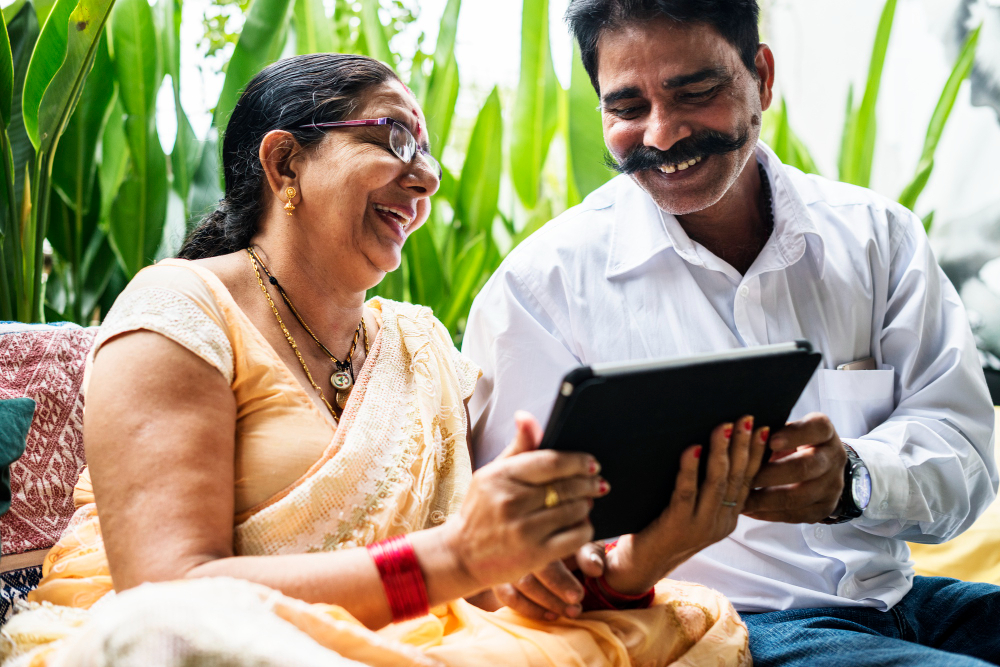
Example of Exemplary
My husband and I were in another city recently, as part of a team that did training on parenting. We had the opportunity to stay an extra day with a couple whose children were out of the home because of studies. This couple’s obvious joy in one another and of being a couple, intrigued me. It created a thirst in me for such a life.
Having just moved into the empty nest stage ourselves, with our children out of our home because of study and marriage, I was eager to learn the secret of their success in handling this season well. I observed and watched them intently to see what I could pick up from their daily life. I found them living life intensely as a couple, with perfect understanding of one another, and having a level of intimate relationships that you see in very few. Their demeanor did not at any time show signs or symptoms of being affected by the empty nest syndrome!
I noticed and noted certain essential life habits that helped them achieve marital bliss at this time, inspite of challenges to their health!
Erudite Gleanings
1. Learn to accept and adapt to this season
This is the most foundational aspect of living life in the empty nest period. We are creatures of habit and prone to set ways. Change is something we resist and find it hard because we tend to settle easily. It is even more difficult when you have to do it in your senior season. More so if you have never gone through transitions or transfers but have always had a continuum. Life has to go one and nothing can we do can ever make it the way it used to be. So, make every effort to assimilate this season and into it!

2. Having a daily schedule and right habit pattern
The second basic need is to develop a regular schedule and a constant lifestyle. Having children to care for, whatever their age, makes life well orchestrated by chores. Daily waking up and sleeping, meal and other food preparation, driving kids to and fro for various activities and study, handling their many sicknesses, recreation, etc., automatically schedules family life. When these are gone, managing time will be a big issue. Unless there is a regularity of daily tasks and food/sleep times, lethargy and sluggishness are prone to set in. These then give rise to sadness and somnolence, ending in depression. Therefore, seek to maintain a clockwork-like lifestyle which will be the key to healthy and cheerful disposition at this time!
3. Do things more together as a couple and less as an individual or by yourself
One of the most important traits that is needed during this season is developing and maintaining togetherness. In previous years, it would be okay, not fully right, but tolerable to each go on their individual pursuits or work or such like. Caring for the children and helping raise them would hold a couple together because of common goals and agendas. With the loss of this sameness of purpose, couples tend to grow apart, especially if each choose their own interests. It is crucial to draw closer to one another and safeguard intimacy by seeking to do things together. As much as possible, even mundane chores and duties should be shared. This will promote camaraderie and rapport which can then grow into greater attachment!
4. Talk to one another rather than at each other
Communication is crucial to closeness, and learning to talk to one another is a key habit to develop. However, many couples either do not really talk to one another but at each other. This means they have lost touch with one another due to various reasons. It is important to now overcome barriers to talk and really listen to one another. This is a time that could bring a healing of past hurts and mistakes due to openness to speak amd willingness to listen. Reviewing the past, dealing with unspoken or undealt with issues will clear the air. It would do much to bring an intimacy that may not have been there before. Also, with no one else to talk to or with, husband and wife better communicate with one another. Otherwise, you may turn to become strangers living in the same premises, just sharing an accomodation!

5. Share meal times as well as recreation times
Sharing talk is not sufficient to keep the flame of relationship burning bright. Work to prioritize and plan meal times during day, or atleast breakfast and dinner! Food and fellowship go hand-in-hand, and nothing is so fulfilling as to have a meal.with a loved one or a mate! Physically eating together as Christians is a signal of spiritual fellowship with one another and the Bible speaks much about fellowship meals as well as food as point of gathering during celebrations. There is something about breaking bread together that builds community and Communion. Therefore, meal times should be give prime place in daily lifestyle and habits!
6. Develop hobbies and hidden or new discover potential
It is important to use time wisely and space profitably to be productive in older years. This will enable a rejuvenation and refreshing of life force, enriching the days that remain. It is a season to discover or uncover hidden potentials or skills, and develop a new way of using time and effort. The days will not drag but gallop when empty nesters pursue unusual hobbies or learn new expertise. In this period, there will be a tendency to lethargy and laziness due to the loss of a known or accustomed lifestyle. This will result in listlessness, growing disinterest in anything, and a general tediousness of life. Hobbies or dreams that have often been laid aside for the sake of children or multitude of tasks can now be picked up, renewed or learnt. This will give rise to new energy and pep up life because new learnings bring new contacts and new occupations which make one look forward to each day!
7. Guard your health and adopt a healthy lifestyle
Crucial to this season is the need to take care of physical health and address any chronic issues that have been neglected till now. Yearly health checkups, proper and balanced diet, a consistent exercise regime, regular meal and sleep times are important will ensure and improve quality of life. Adopting and learning to eat or do what promotes and fosters health is needed so as to enjoy life as well as not be a burden to others. Also, maintain a cheerful disposition, keep up emotional stability and focus on right thought life will help live life fully. One must learn to live rather than just exist!

8. Care for one another and help each other
Rather than being just individuals sharing just a living space and pursuing different paths, learn to show genuine interest in thre other. Helping one another in weaknesses or infirmities will real heart connection. Understanding the other’s unspoken needs or fulfilling hitherto unexpressed desires would draw you together as a couple. Learn to express your feelings of love, care, and appreciation rather than your woes. Forgive thoughtlessness or misdemeanorsof the past, and begin life anew, like a newly wed couple. Companionship and being there for one another will enhance relationship, forging you into oneness. Real and true heart connection will happen that will bond you together as one. Lending your strength to the other and involving them in every nuance of your life will help alleviate loneliness. Thus, rather going on separate orbits or paths, you become fused and focused as a couple, more solid than ever, making home a safe haven, and not a hell!
9. Serve the community or do social work
Once heart connection is achieved and health habits developed, it is time to look beyond your small and secure circle. There is a whole world outside your small home that needs your expertise and is awaiting for your experience. Begin to volunteer in social work or church projects, step up to teach others what you have learnt in life, train others in what you do best, and be available to help young people with heart issues. Learn counselling and begin to mentor young couples who will benefit from your wisdom and insight. Be involved in and aware of those around you, and their needs. Stop being selfish and start giving back to society, being a contributor rather than just a consumer. Promote measures that enhance the environment, and be involved in preserving our world through participating in activities such as beach cleaning, reclamation of water bodies, etc. Such community or social welfare activities and actions will also gather people around you who will fill the void left behind by your children!
10. Pray together and be part of a community of faith
An important aspect of life at any season is to reach out to God in prayer and praise for daily sustenance and strength. It is more needed in this period of time when, often times, you may feel neglected by your children or have to bear some of their burdens as they download on you. Being available emotionally for your cqhildren, which is what they will need from you as they feather their nest or build it, can be taxing. To be able to cater to them and help them differently requires much stamina and grit, more so now than when they were with you. Therefore, spending time together as a couple in prayer, for them and for others as well as for yourselves, should be an important part of your daily life. Being part of a community of faith in worship and small group gatherings will replenish your strength and energy. Taking active role and part in the faith community, as mentors and counsellors, being available for hospital or prison visitation, and such like will enhance your spiritual well-being. As King Solomon the Wise has proverbially said, as you water others you yourself will be watered!

Empty nest period is a sure part of life, both inevitable and unavoidable. It is no use bemoaning or belittling this season, since thats how life really is.
You have the means to make your life enjoyable or intolerable at time. You can make it worthwhile for each other, and cover lost ground in your marriage; or waste these precious moments by not accepting this part of your life.
You can use it well.or waste it in longing for something that is past and cannot be got back.
You can be a boon or a bane for one another and for others as a couple, including your children!
You can be a blessing to one another, and as a couple to community and society.
You can live fulfilling, wholesome and healthy lives, being an example and a challenge, a pattern and a precedent for others going through the same season!
 MULLINGSPICE